

CG Policy · 2025
In this section7 topics
Corporate Governance Policy
Introduction
The company has established operational policies related to the executive management's corporate governance system to ensure efficient company administration and to enhance transparency and effectiveness of management, which will lead to building confidence among shareholders, investors, and all stakeholders. The company has published the details of its good corporate governance policy on its website (www.stoneone.co.th) in the "Investor Relations" section to communicate to all stakeholders comprehensively and to be adopted as correct practice. The details of the main practices are as follows:
Has a Corporate Governance Policy
Yes
Policy Description
Stone One Public Company Limited operates a quarry business for the production and distribution of construction aggregate products and dolomite, and also provides transportation services, with quality recognized by both major and minor customers. This has resulted in stable growth for the company.
The Board of Directors recognizes that good corporate governance is crucial for driving the organization to be efficient, transparent, and fair. Therefore, it has established a good corporate governance policy consistent with the guidelines of the Securities and Exchange Commission (SEC) (CG Code), and instills ethics and awareness among directors, executives, and employees at all levels to ensure they are informed and strictly adhere to them. Furthermore, the Board consistently focuses on monitoring and reviewing operations to build confidence among shareholders, investors, and all stakeholders.
Additionally, the company emphasizes reviewing and updating its corporate governance policy to ensure it remains current, continuously aligning with legal requirements and changes in economic and social conditions, with the goal of achieving sustainable growth and fulfilling its planned objectives.
Therefore, the company has established its good corporate governance policy, with details as follows:
-
Treating all shareholders and stakeholders equally and fairly.
-
The Board of Directors is committed to creating long-term value for the business, managing operations with prudence and caution, and is responsible for performing its duties with sufficient competence and efficiency to maximize benefits for shareholders, ensuring that conflicts of interest do not arise, and being accountable for its decisions and actions.
-
Conducting business with transparency, integrity, and accountability, and disclosing sufficient information to all relevant parties.
-
Conducting business with prudence, especially concerning risks, which involves appropriate and consistent assessment, strategic remediation, and monitoring of risk management.
-
The Board of Directors has established a company code of conduct for all directors, management, and employees to adhere to. Furthermore, to comply with the guidelines of the Stock Exchange of Thailand, it has set policies and directions for good corporate governance, prioritizing internal control and audit systems, and overseeing management to ensure efficient implementation of policies for the long-term benefit of shareholders, in accordance with legal requirements and business ethics.
-
Promoting and supporting all directors and management to continuously attend training courses with the Thai Institute of Directors Association (IOD) and other relevant institutions to enhance their knowledge in various aspects related to the roles and responsibilities of directors and management.
-
Regarding anti-corruption operations, in 2026, the company has set a plan to prepare for the declaration of intent phase. to serve as a collective action framework for the Thai private sector in combating corruption (Private Sector Collective Action Coalition Against Corruption - CAC)
Policy Document Link
https://www.stoneone.co.th/wp-content/uploads/2024/04/Good_Corporate_Governance_Policy_EN-.pdf
Policy & Practices — Board of Directors
Introduction
The Board of Directors has established the company's vision, mission, strategies, business plans, budgets, and business objectives. This includes reviewing and adjusting them to suit the situation when significant changes occur, ensuring their suitability with the evolving business environment. The Board of Directors reviews the company's vision, mission, and strategies annually, considering them for approval at a Board meeting during the first quarter of the year. Furthermore, the Board oversees the management's efficient and effective execution of the established objectives and monitors the implementation of the company's strategies. This also includes establishing appropriate internal control, internal audit, and risk management systems, as well as mandating regular, high-quality financial reporting under the supervision of the Audit Committee. This comprehensive approach aims to enable the company to achieve its set goals and to ensure maximum benefit for all stakeholders.
Has Policy & Guidelines for the Board
Yes
Board Guidelines
| Guideline | Other — Please Specify | Detail |
|---|---|---|
| Nomination of Directors | Recruitment and Appointment of Company Directors The company recognizes the importance of recruiting board members, sub-committee members, and executives appropriately for their duties and responsibilities. This includes considering the drive towards organizational goals, alignment with the company's performance, and the ability to compete with other similarly sized companies in the industry. The process of recruiting and selecting candidates for the company's directorships is conducted through the Nomination and Remuneration Committee. This committee comprises at least 3 company directors, with more than half being independent directors. The committee carefully considers and selects individuals to serve as directors, taking into account the board's structure, including board diversity (Board Diversity policy) such as gender, ethnicity, and the board's skill matrix (Board Skill Matrix). This ensures that the company has directors with the necessary skills that align with the company's business operations. The evaluation also includes qualifications for directorship in various aspects, such as suitability in terms of education, experience, and expertise, as well as performance as a company director. Furthermore, candidates must not possess any prohibited characteristics as stipulated by law and the announcements of the Securities and Exchange Commission for appointment as company directors. Nominated individuals must have undergone the company's prescribed selection process, meet relevant criteria, and be suitable for the company's business operations. The recruitment and appointment of directors must be approved by the shareholders' meeting. The term of office for directors is clearly stipulated in the company's articles of association. In accordance with the regulations for the Annual General Meeting of Shareholders, at least one-third of the total number of directors on the board must retire by rotation. If the number of directors cannot be divided exactly by one-third, the number closest to one-third shall retire. Retiring directors are eligible for re-election. This means each director serves a term of 3 years. The company has established a balance of directors, with the Board of Directors comprising a total of 10 members. This includes 4 executive directors, 2 non-executive directors, and 4 independent directors. The company has established an Audit Committee consisting of 3 independent directors, and there is 1 independent director who is not a member of the Audit Committee. This accounts for 40% or 4 out of 10 of all directors being independent directors. The Audit Committee serves as a representative of minority shareholders, tasked with overseeing the company's operations to ensure accuracy and transparency. In 2025, the company has a policy to limit the number of listed companies in which each director may hold a position. However, currently, no director holds directorships in more than 5 listed companies on the Stock Exchange of Thailand. | |
| Determination of Director Remuneration | The Company determines the remuneration of directors and executives through the Nomination and Remuneration Committee, which consists of 3 directors, comprising 2 independent directors and 1 executive director. This committee is responsible for considering policies and criteria for determining the remuneration of the Board of Directors and executives, which have been carefully and appropriately considered. The Company offers three types of director remuneration: monthly remuneration, bonuses, and non-monetary compensation. In determining the remuneration of the Company's directors and executives, reference is made to the average of listed companies on the Stock Exchange of Thailand and employee remuneration survey reports from human resources institutions. This is done by comparing with the same industry group, as well as linking it to the performance of directors and executives, the Company's performance indicators, the Company's profit growth, other factors that may affect the Company's operations, and including the satisfaction of stakeholders. | |
| Independence of the Board of Directors from the Management | The Company clearly segregates duties and defines the scope of authority for the Board of Directors, the Executive Committee, and the Audit Committee, as detailed in the Corporate Governance Structure section. The positions of Chairman of the Board and Chief Executive Officer are not held by the same person, which ensures transparent operations, provides sufficient checks and balances, and allows for oversight of the Company's performance. Furthermore, for independence, the Chairman of the Board is an independent director, and there are 3 other independent directors among the total number of board members. Nevertheless, the approval of significant resolutions still requires approval from the Board of Directors' meeting and/or the shareholders' meeting. Additionally, the authority granted to the Board of Directors, the Executive Committee, the Chairman, and the Chief Executive Officer is delegated in a manner that prevents any director with a conflict of interest from approving any transactions in which they, or persons who may have a conflict of interest with them, are involved with the Company or its subsidiaries. | |
| Director Development | The Company prioritizes promoting, supporting, and facilitating directors, executives, and all relevant employees involved in driving the Company to operate in accordance with good corporate governance principles. Concurrently, the Company has a plan to support directors and executives in regularly and continuously attending training courses, seminars, or lecture activities to develop and enhance knowledge in various fields, which can be applied to perform duties more efficiently and create maximum benefit for the Company and all stakeholders. To promote the smooth operation of the Company's business, the Company organizes an orientation for all new directors. This is to ensure that new directors are informed about the Company, their scope of authority and responsibilities as directors, and compliance with relevant rules, regulations, and laws. The presentation topics include the Company's vision and mission, business plan, company history, shareholder structure, organizational structure, list of executives, board meeting agendas, and meeting minutes from the past year. A director's handbook is also provided for new directors to study the guidelines for performing duties as directors of a listed company. | |
| Board Performance Evaluation | The Company conducts annual performance evaluations for the Board of Directors and its sub-committees, including the Audit Committee, the Nomination and Remuneration Committee, and the Risk Management Committee. These evaluations are conducted both at the committee level and on an individual basis to assess the suitability of the board structure and the performance of the Board of Directors. The evaluation is divided into 6 categories: Board Structure and Qualifications, Roles, Duties, and Responsibilities of the Board, Board Meetings, Board Dynamics and Performance, Relationship with Management, and Director Development. The Company Secretary will distribute each type of questionnaire to all directors. Each main topic will include sub-items, allowing for a satisfaction score of 0-4 points. After receiving all types of evaluation results from each director, the Company Secretary will compile the scores and report them to the Board of Directors' meeting. | |
| Corporate Governance of Subsidiaries and Associated Companies | The company has a policy to invest in businesses related to its core operations, which are deemed to generate mutual benefits or support the company's operations, thereby increasing revenue channels and enhancing the company's profitability. When considering investment decisions, executives are required to analyze feasibility and assess the potential for profitability, including investment risks, operational performance, returns and the presence of sound internal controls. The proposal must then be presented to the Executive Committee for initial approval and subsequently to the Board of Directors for final approval, in accordance with the Securities and Exchange Act and the regulations, announcements, orders, or requirements of the Stock Exchange of Thailand. The funding sources utilized by the company for various investments will depend on the nature of the business and the scale of the investment, which will determine the appropriate investment structure. Furthermore, subsequent to investing in subsidiaries and associated companies, the Executive Committee is required to ensure that management monitors the performance and operations of the invested businesses and reports to the Board of Directors accordingly. | |
| Other guidelines regarding the board of directors | Board of Directors Meeting | The company will inform directors of the dates of board meetings for each year in advance at the beginning of the year to enable all directors to allocate time to attend all board meetings. The advance notification of the meeting schedule will only cover regular agendas. Should there be a necessity or an urgent matter requiring consideration, the company will convene special board meetings in addition to those initially scheduled. The Company Secretary will send advance invitations for board meetings to all directors, providing information for consideration on each agenda item. The principles for arranging Board of Directors meetings and details regarding the meetings are as follows: The company will hold Board of Directors meetings at least once every three months. The company stipulates that directors are obligated to attend all board meetings, except in cases of necessity. Furthermore, starting from 2025, the company will mandate one meeting among non-executive directors during the first quarter of each year. Each Board of Directors meeting has a clear agenda set in advance, and performance is regularly reviewed and monitored. The company ensures that invitations to meetings, along with the agenda and supporting documents, are sent to all directors at least 3 days prior to the meeting date, except in urgent cases necessary to protect the company's rights and interests. This is to allow the Board sufficient time to review the information before attending each meeting. The Chairman of the Board is responsible for allocating sufficient time for management to present matters and for important issues to be thoroughly considered by all. Furthermore, accurate and complete minutes of the meeting must be recorded in writing, and the minutes approved by the Board must be stored for inspection by the Board and relevant parties. In addition, the company has a policy to encourage all directors to attend meetings. Should a director be unable to attend a meeting at the designated location, the company also provides an alternative channel for participation by organizing remote meetings via electronic means, enabling all directors to attend and continuously perform their duties. |
Policy & Practices — Shareholders and Stakeholders
Introduction
The Company prioritizes the care and consideration of all stakeholder groups that may be affected by its business operations, both internal and external, including customers, shareholders, employees, creditors, debtors, competitors, and various related agencies. Furthermore, the Company continues to place great importance on social and environmental responsibility, as its core business operations inevitably impact society and the surrounding environment. Therefore, the Company has established policies and guidelines concerning shareholders and stakeholders, in accordance with their rights, conditions, legal provisions, and various regulations, to ensure that stakeholders are well-cared for and treated appropriately, as detailed below.
Has Policy & Guidelines for Shareholders and Stakeholders
Yes
Shareholder & Stakeholder Guidelines
| Guideline | Other — Please Specify | Detail | ||||||||||||||||||||||||||||||||||||
|---|---|---|---|---|---|---|---|---|---|---|---|---|---|---|---|---|---|---|---|---|---|---|---|---|---|---|---|---|---|---|---|---|---|---|---|---|---|---|
| Shareholder | 1) Shareholders' Rights The company's Board of Directors recognizes the importance of shareholders' rights and has a policy to protect these rights and encourage shareholders, including institutional investors, to exercise them. This covers fundamental legal rights such as sharing in the company's profits, buying, selling, or transferring shares, and receiving sufficient news and information about the company. It also includes attending meetings to exercise voting rights at shareholder meetings for the appointment or removal of directors, determining directors' remuneration, appointing auditors and setting audit fees, and matters affecting the company, among others. Additionally, the company mandates the presentation of important information that shareholders should be aware of, published on the company's website, www.stoneone.co.th, under the "Investor Relations" section, such as shareholder meeting invitations and shareholder meeting minutes. This includes granting rights to one or more shareholders holding shares with combined voting rights of not less than 5% of the total voting rights to propose shareholder meeting agendas and nominate individuals for consideration as company directors, as well as the Form 56-1 One Report, etc. The company announced the right of shareholders to propose meeting agendas and nominate qualified individuals for election as company directors in advance through the Stock Exchange and published the relevant criteria on the company's website from November 1, 2024, with a 3-month period to exercise these rights. For the past year 2025, the company made the shareholder meeting invitation and supporting documents available for shareholders' prior consideration via the company's website from April 1, 2025, and sent them to shareholders by mail from April 8, 2025. Additionally, the meeting minutes were presented via the website within 14 days after the meeting, specifically from May 14, 2025. Furthermore, the company has no policy to infringe upon shareholders' rights; it will not distribute documents with sudden additional material information at the meeting, add new agenda items, or change important information without prior notification to shareholders. Shareholders are granted the right to question the Board of Directors at the meeting, and the right of shareholders who request late entry to the meeting is not restricted, among other rights. 2) Equal Treatment of Others The company prioritizes treating all shareholders, including institutional investors, equally. The company consistently discloses material information, accurate, complete, timely, and transparent news to shareholders. For shareholder meetings, the company will send meeting invitations along with supporting documents for various agendas to shareholders at least 21 days prior to the meeting date, and will also publish the meeting notice in newspapers, with each agenda item fully accompanied by the Board of Directors' opinions. This is to allow shareholders sufficient time to review the information before attending the meeting. Meeting minutes are accurately recorded for shareholders' inspection. Furthermore, the company offers shareholders an additional option by allowing the company's independent directors to act as proxies for shareholders who are unable to attend the meeting. In 2025, the company held one shareholder meeting, which was the Annual General Meeting of Shareholders 2025, on April 30, 2025, at 10:00 AM, in an electronic meeting format, to consider the company's important annual agendas. All shareholders were able to exercise their voting rights and express opinions or ask questions before making decisions. Furthermore, the company facilitated shareholders by allowing them to request meeting invitations and supporting documents in electronic file format and paper format via the published phone number and email. At this shareholder meeting, the company arranged for a legal advisor to conduct the meeting, whose duties included informing the quorum details, explaining the voting method, vote counting, ballot usage, and disclosing the vote counting results for each agenda item. The meeting provided shareholders with appropriate and sufficient opportunities to ask questions or express opinions. For the agenda item concerning the election of directors, individual voting was arranged. Before the Shareholder Meeting The company disclosed the complete details of the meeting invitation on its website in advance, from April 1, 2025. It also sent the meeting invitation, which included detailed agendas, the Board of Directors' opinions, complete minutes from the previous meeting, the annual report, supporting documents for the meeting, necessary proxy documents, and clearly specified procedures, through the company's registrar to shareholders in advance on April 8, 2025. In 2025, the company published the meeting invitation and other supporting documents on its website on April 1, 2025, and sent the meeting invitation and other supporting documents to all shareholders from April 8, 2025, in a sealed format displaying a QR Code for document download. This was to notify shareholders sufficiently in advance to prepare and study the information before attending the meeting. Additionally, to facilitate shareholders who could not attend in person, the company sent proxy forms A-C along with the meeting invitation and proof of attendance, which specified the necessary documents for attending the meeting. It specified both shareholders attending in person and those wishing to appoint a proxy to attend on their behalf, enabling shareholders to prepare complete and correct documents and avoid issues during the meeting. Furthermore, Mr. Att Tongyai Asavanund, who serves as Chairman of the Audit Committee / Independent Director, and Mr. Phitsanu Thupthong, Audit Committee Member / Independent Director, were appointed as proxies for shareholders who wished to appoint others to attend the meeting on their behalf, or shareholders could choose to appoint any specific individual as their proxy. For the electronic meeting, the company opened the registration system for submitting attendance requests from April 1, 2025. On the Day of the Shareholder Meeting For the Annual General Meeting of Shareholders 2025, a total of 10 directors were scheduled to attend, with 9 directors actually participating, namely: 1. Dr. Jrarat Pingclasai, Vice Chairman / Chairman of Executive Committee; 2. Mr. Ikuo Ano, Vice Chairman; 3. Mr. Att Tongyai Asavanund, Chairman of the Audit Committee / Chairman of the Nomination and Compensation Committee / Chairman of the Risk Management Committee / Independent Director; 4. Dr. Kwanrat Suanpong, Audit Committee Member / Independent Director; 5. Mr. Phitsanu Thupthong, Audit Committee Member / Nomination and Compensation Committee Member / Risk Management Committee Member / Independent Director; 6. Mr. Yohei Ano, Director; 7. Mr. Jareanrat Pingclasai, Director / Executive Director / Risk Management Committee Member; 8. Mr. Krittanan Pingclasai, Director; and 9. Mr. Songwut Vejjanukroh, Director / Executive Director / Nomination and Compensation Committee Member. No directors attended the meeting via video conference. One director was unable to attend the meeting due to an overseas business trip. Ms. Amonlapa Rakpan, Senior Associate of Araya & Partners Co., Ltd., attended the meeting as an independent vote counting representative to observe the vote counting process for transparency. After the Meeting The company submitted the shareholder meeting minutes and published them on the company's website within 14 days, specifically on May 14, 2025. | |||||||||||||||||||||||||||||||||||||
| Employee | The company recognizes the importance of its employees as key contributors enabling the company's various plans to achieve its defined business objectives. Therefore, the company treats its employees fairly and equally, as follows:
| |||||||||||||||||||||||||||||||||||||
| Customer | The company places importance on providing services to customers and considers it a crucial working principle that employees, executives, and relevant officers should adhere to and implement, with details as follows:
| |||||||||||||||||||||||||||||||||||||
| Business competitor | Fair competition and not taking advantage of competitors or other businesses in the same industry are mechanisms through which the company continuously builds its reputation and long-standing experience. The company adheres to the following principles of conduct and responsibilities towards stakeholders:
| |||||||||||||||||||||||||||||||||||||
| Business partner | The importance of business partners is crucial in supporting and driving the company's operations smoothly. Therefore, the company treats its business partners fairly, strictly adhering to mutually agreed-upon commercial terms. The company's principles of conduct and responsibilities towards stakeholders are as follows:
| |||||||||||||||||||||||||||||||||||||
| Creditor | The treatment of creditors, who are business partners, raw material suppliers, and service providers to the company, must be in accordance with the mutually negotiated agreements and conditions to ensure smooth commercial transactions for the company and all creditors. The company adheres to the following principles of conduct and responsibilities towards stakeholders:
| |||||||||||||||||||||||||||||||||||||
| Government agency | The Company is fully aware of the roles, duties, and responsibilities of government agencies and regulatory bodies concerning its operations. Therefore, the Company is committed to and cooperates in complying with all rules, regulations, stipulations, and laws related to its operations, with the aim of alleviating the burden on those agencies. Furthermore, the Company has assigned the Company Secretary the responsibility of reviewing compliance with all rules, regulations, stipulations, and laws related to the Company's operations. The internal auditor is also tasked with reviewing operational compliance with the operational manual and relevant standards, and reporting the review results to the Audit Committee annually. | |||||||||||||||||||||||||||||||||||||
| Community and society | Community and Society The company is committed to supporting social activities to create a good quality of life for people in society and the community, as well as continuously promoting and instilling a sense of social responsibility among employees at all levels.
| |||||||||||||||||||||||||||||||||||||
| Other guidelines regarding shareholders and stakeholders | Stakeholder Consideration | 1) Stakeholder Consideration The company recognizes and prioritizes the care and consideration of all stakeholder groups, both internal and external, including customers, shareholders, employees, creditors, debtors, competitors, relevant agencies, as well as social and environmental responsibilities. This is because the company acknowledges the support of various stakeholders who contribute to building competitiveness and good performance for the company, and serve as excellent long-term support. Further details can be found under "Good Corporate Governance" published on the company's website (www.stoneone.co.th) in the "Investor Relations" section, with the following topics:
Additionally, the company has published "Corporate Activities" on its website (www.stoneone.co.th), which are activities where the company participates in developing and caring for the environment, communities, and various activities that promote business operations with a focus on stakeholders. Treatment of Personnel In terms of personnel development, the company places great importance on developing employees at all levels to enhance their knowledge both knowledge related to their current work and the skills needed to support their career advancement. The company provides training both internally and through external training organizations.
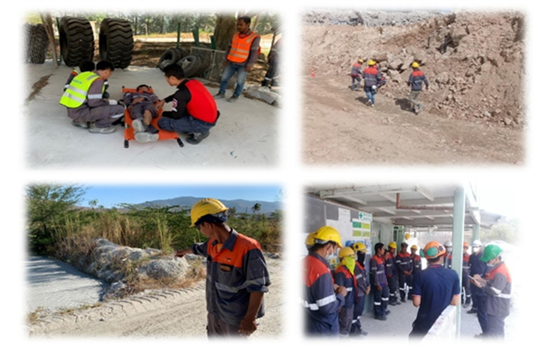
In the past year 2025, the company and its subsidiaries provided training to employees and executives of the company and its subsidiaries, totaling 27 courses, with 21 internal training sessions and 24 external training sessions. The Company had strong emphasis on occupational health and safety, as its business involves the production of industrial stone for construction purposes. The production process includes several stages such as excavation, drilling, blasting, crushing, and stone processing in order to produce high-quality products that meet customer requirements. Therefore, each stage of the production process requires specialized expertise and experience. The Company has established safety measures and policies to ensure the safety of employees during their work, along with dedicated units responsible for monitoring operations and regularly providing employees with knowledge and training on safety practices. These efforts aim to minimize workplace accidents and reduce potential losses arising from operations. In 2025, the company and its subsidiaries recorded two cases of employee injuries or work related accidents, equivalent to an Injury Frequency Rate (IFR) of 4.60 per one million working hours. The company provides welfare support for injured employees, and there were no fatalities resulting from work operations. Regarding sick leave due to work-related accidents, there were two employees taking leave, accounting for 1.05 percent of the total workforce of the company and its subsidiaries. In addition, the company has implemented an annual health check-up program for all personnel of the company and its subsidiaries to ensure employee well-being. Whistleblowing or complaints To provide a channel for stakeholder engagement, the company has opened communication channels to receive complaints, suggestions, and feedback for contacting the Board of Directors via the company's website, or by mail or direct submission at the company. For the year 2568, the company received no complaints and whistleblowing reports regarding company misconduct from any channel. Anti-Corruption The company operates its business ethically, adhering to good corporate governance principles, and is committed to social responsibility and all stakeholder groups. The company has developed an Anti-Corruption Policy to define responsibilities, guidelines, and corruption prevention measures, serving as a clear operational guideline for business and fostering a sustainable organization. For the year 2025, the company has prepared a readiness plan for the year 2026 to join the Thai Private Sector Collective Action Against Corruption (CAC). This is to demonstrate the company's intention to be part of the Thai private sector's efforts to combat corruption, as well as the company's responsibility in joining the CAC. 2) Information disclosure and transparency The Company recognizes the important of accurate, complete and prompt disclosure of important information of the company including the company performance information, clearness shareholding structure which detailed in Shareholding Structure section and the corporate governance policy, which was disclosed in the One Report and the Company website at www.stone.co.th. Regarding the quality of financial reporting, in 2025 the Company appointed PricewaterhouseCoopers ABAS Ltd. as its external auditor. The appointed auditor is independent and has been approved by the Securities and Exchange Commission. For the Company’s financial statements for the year 2025, the auditor issued an unqualified opinion, confirming that the financial statements present fairly, in all material respects, the financial position and performance of the Company in accordance with applicable financial reporting standards. In addition, the Company has established policies requiring directors to report their interests to ensure that the Company has sufficient information to comply with the requirements relating to connected transactions, which may give rise to potential conflicts of interest, in accordance with the Securities and Exchange Act. Furthermore, the company has established criteria requiring directors to report their interests to ensure the company has information for compliance with regulations concerning connected transactions, which are transactions that may lead to conflicts of interest and are in accordance with the Securities and Exchange Act. The company has established an Investor Relations Department as another channel for disseminating company information, as well as communicating and disclosing information to the company's shareholders, analysts, and interested general investors. The company's Investor Relations Department can be contacted at telephone number 02 391 9301, email address ir@stoneone.co.th, or important company information such as financial data, shareholder information, good corporate governance, personal data protection policy, analyst information, financial statements, annual reports, shareholder meeting invitations, and shareholder meeting minutes can be viewed on the company's website (www.stoneone.co.th) by selecting the "Investor Relations" section. In 2025, the Company has disclosed and presented the information to related parties as follows.
Guidelines for compliance with corporate governance principles The company is aware of good corporate governance and good ethics. Therefore, the company has established a total of 8 core principles, including guidelines. The Board of Directors considers each principle to be extremely important for the company's good corporate governance. These principles will impact directors, executives, and employees at all levels, fostering awareness and instilling ethics and good corporate governance, so that directors, executives, and employees at all levels understand and can operate and manage the company for sustainable and stable growth. The main 8 principles as follow: Principle 1: Recognize the role and responsibility of the Board of Directors as an organizational leader that creates sustainable value for the business. Principle 2: Define the main objectives and goals of the business for sustainability. Principle 3: Enhance an Effective Board of Directors. Principle 4: Recruitment and Development of Senior Executives and Human Resource Management. Principle 5: Promote Innovation and Responsible Business Operations. Principle 6: Ensure appropriate risk management and internal control systems. Principle 7: Maintain Financial Credibility and Information Disclosure. Principle 8: Support Shareholder Engagement and Communication. 1) Principle 1: Recognize the role and responsibility of the Board of Directors as an organizational leader that creates sustainable value for the business. Principle 1.1 The Board of Directors is aware of the role duties and responsibilities of directors. The roles, duties and responsibilities of the Board of Directors have been defined in writing. which specifies the powers, duties and responsibilities of the Board of Directors including the meeting and voting of the directors. The Company's directors had duty to manage with good governance. Guidelines
Principle 1.2 The Board of Directors, as corporate leaders, creates value for the Company, and creates sustainable growth. The committee must lead the organization to achieve its goals by these following guidelines: Guideline
Principle 1.3 The Board of Directors must ensure that directors and management will perform duties responsibly, honesty, careful and cautious in accordance with the principles of good practice in order to bring the maximum benefit to the Company, build confidence for shareholders, stakeholder, and all related persons. Guideline
2) Principle 2 Define Objectives that Promote Sustainable Value Creation Principle 2.1 The Board of Directors clearly defines the objectives and main goals of the business for sustainable growth of the organization with considering the interests of shareholders and stakeholders. Guideline
Principle 2.2 The Board of Directors, as corporate leaders, creates value for the Company, and creates sustainable growth. The committee must lead the organization to achieve its goals by these following guidelines: Guideline
3) Practice 3 Strengthen Board Effectiveness Principle 3.1 The Board of Directors should have its structure which consists of the components and criteria of the Board of Directors, qualifications of company directors and independent directors, appropriate tenure to enhance the person holding the position of director with appropriate qualifications and able to control and supervise the business effectively. Guideline
Principle 3.2 The Board must be sure to have recruitment for the directors to take the office with the suitable qualification to lead the organizational growth with sustainability and accomplishment of the organization’s main goal. Guideline
Principle 3.3 The Board of Directors should supervise the process of nomination and selection of directors to be accurate and transparent. Guideline
Principle 3.4 The Board of Directors ensures that all directors who take a new position understand the business, and be able to strengthen the directors to have the skills to develop the Company's business for sustainable growth. Guideline
Principle 3.5 The committee determines the appropriate remuneration for all directors and can incentivize the organization or Company to achieve its main goals in the short and long term and presented to shareholders for further approval. Guideline
Principle 3.6 The Board of Directors must ensure that within the organization there is a balance of power among non-executive directors. Guideline
Principle 3.7 The Chairman of the Board of Directors should be an independent director and not the same person as the Chief Executive Officer to clearly separate the duties and responsibilities between the Board of Directors and the Management. Guideline
Principle 3.8 The Board of Directors has appointed sub-committees to assist in the governance of the Company and to increase operational efficiency as well as to ensure that shareholders can be confident that the Company operates and screened carefully. Guideline
Principle 3.9 The Board of Directors should provide annual performance assessment of all directors in order to improve, develop, and extend the skills of future directors to suit their duties. Guideline
Principle 3.10 The Board of Directors encourages all directors to develop their knowledge and skills and understand good corporate governance. Guideline
Principle 3.11 The Board of Directors holds Board meetings and Audit Committee meetings on a quarterly basis and extraordinary meetings as necessary to encourage all committees to listen and exchange opinions to increase the efficiency of the Company's operations and the Board of Directors must ensure that the meeting is transparent and fair. Guideline
Principle 4 Ensure Effective CEO and People Management Principle 4.1 The Board of Directors must ensure that the selection of senior executives meets the appropriate qualifications, knowledgeable, honesty, integrity and ethics to take the position to ensure that the top management is the person who has the ability to drive sustainable business growth according to the Company's goals. Guideline
Principle 4.2 The Board of Directors has established the appropriate remuneration structure for senior management. Guideline
Principle 4.3 The Board of Directors has established a structure to assess the performance of senior management in the organization to perform duties efficiently and appropriately. Guideline
Principle 5 Nurture Innovation and Responsible Business Principle 5.1 The Board of Directors encourages and supports directors, executives, and personnel at all levels to be creative and create new innovative ideas for the organization. It also creates added value to the organization with considering the impact on society and the environment. Guideline
Principle 5.2 The Board of Directors allocate and manage the Company's resources efficiently with considering the impact on the Company and subsidiaries, including considering the impact on society and the environment. As a result, the organization can achieve the goals that have been set. Guideline
Principle 5.3 The Board of Directors has followed up and assess the performance of directors, executives, and employees at all levels to ensure that all levels in the organization are responsible for social and environmental impacts and perform duties with honesty, integrity and responsibility, considering the shareholders and stakeholders. Guideline
Principle 5.4 The Board of Directors attaches importance on the rights and equal treatment of all stakeholders related to the Company's operations. Guideline
6) Principle 6 Strengthen Effective Risk Management and Internal Control Principle 6.1 The Board of Directors has oversight to ensure that the organization has risk management system and internal control and audit systems for both at the executive level and operational level that are efficient. Guideline
Principle 6.2 The Board of Directors realize that the importance of using the internal data of the Company is not for self-benefit; therefore, it had designated the policy on using the internal data of the company for its personnel, the management and all levels of the employees who used the organizational data must disclose it to other people or for self-benefit, including the stock trading. Guideline
Principle 6.3 The Board of Directors should ensure that clear anti-corruption policies and guidelines are developed and communicated at all levels of the organization and to outsiders to ensure their practical implementation. Guideline
Principle 6.4 The Board of Director should supervise for the business to have a mechanism on accepting a complaint and engage in it, if there is a clue. Channels of giving the clues
Guideline
7) Principle 7 Ensure Disclosure and Financial Integrity Principle 7.1 The Board of Directors has prepared the report disclosing important financial information and non-financial information that is accurate, complete, reliable, thorough, timely, transparent and in accordance with the regulations of the Stock Exchange of Thailand and the Securities and Exchange Commission. Guideline
Principle 7.2 The Board of Directors has set up unit to take care of the relationship with investors, to provide important information that affects investors' decision-making and stakeholders to be transparent, reliable, accurate, clear, thorough and timely. Guideline
Principle 8 Ensure Engagement and Communication with Shareholders As the owner of the Company, they shall have the right to determine the direction of the Company's business operations and make decisions on important matters of the Company. The Board of Directors is aware of the rights of the Company's shareholders. The Company has clearly written the benefits of shareholders as follows: Voting to express opinion Shareholders of the Company have the right to vote and express opinions equally and fairly to all parties as stated in the Company's Articles of Association whereby 1 share of shareholder has the right for 1 vote. Acknowledgment of the Company's operating results The Company's performance is a top priority for investors, especially the annual performance. The Company's shareholders have the right to acknowledge the Company's operating results. Therefore, the Company has prepared supporting document explaining the Company's past annual operating results for the shareholders to acknowledge and understand the Company's performance accurately and clearly. Consideration and approval of the Company's financial statements Investors' right to consider and approve the Company's financial statements is important. Therefore, the Company has prepared financial statements that are accurate, complete, reliable and cover material matters according to general accounting standards and must pass audit and express opinion from an auditor who is independent and has reputation that is generally accepted. Receive dividends from the Company's performance The Company's shareholders have the right to consider and approve the Company's dividends. The Company provides details of the correct dividend calculation which is clear and covers all important matters that are useful for shareholders' consideration, such as dividend payment policy, etc. In the event that the Company cannot pay dividends from the company's operations, the Company will explain the reasons and the necessity for such matters. Consideration and Appointment of Company Directors Shareholders have the right to consider and appoint the Company's directors individually. The Company provides details, history of the Company's Directors who were nominated for the appointment of the Company's directors accurately, clearly and comprehensively, covering material matters for shareholders' consideration. Consideration and approval of directors' remuneration The Company's shareholders have the right to consider and approve the directors' remuneration. The Board of Directors has established policy for the remuneration of directors. The composition of the remuneration is classified according to the position and responsibilities of the directors, comparison of compensation with the previous year, compensation offering method, The proposed remuneration has been carefully considered by the Board of Directors before proposing to the shareholders' meeting for further consideration. Appointment of auditors and approval of audit fees Shareholders have the right to appoint auditors and approve audit fees. The company provides detailed information that is accurate, transparent, clear, and covers the material matters for shareholders' consideration. Consideration and Approval of connected transactions To protect the rights of shareholders for the material transactions that the Company enters into such transactions, the shareholders have the right to approve and consider entering into the connected transactions of the Company. Other fundamental rights of shareholders in accordance with the rules, regulations, and related laws Capital increase of the Company, the Company will provide details that are accurate, clear, and cover material matters for shareholders' consideration, such as objectives and necessity for capital increase, methods and conditions of the capital increase, the effect of the Company's capital increase as well as shareholders, etc. In addition, the Company has set the general meeting of shareholders once a year with no more than 4 months from the end of the Company's fiscal year. If there is an urgent need, the agenda must be proposed as a special case which may affect the shareholders and those involved or related to applicable laws, rules, and regulations that must be approved by the shareholders. Then, the Company will arrange Extraordinary General Meeting of Shareholders on a case-by-case basis. Principle 8.1 The Board of Directors realizes the importance of equitable and fair treatment to all shareholders, so that shareholders can exercise their voting rights equally and participate in the Company's shareholders' meeting. Guideline
Principle 8.2 The Board of Directors is confident that the shareholders' meetings are orderly, transparent, clear and fair to all shareholders. Guideline
Principle 8.3 The Board of Directors and the management team have the intention of prudently eliminating conflicts of interest with honesty, reason and independence within the framework of good ethics for the overall benefit of the Company. Guideline
|
Code of Conduct
Has a Business Code of Conduct
Yes
Code of Conduct Description
Stone One Public Company Limited aims to become a leading company in the business of producing and distributing construction stone, including dolomite, through efficient and transparent operations, social and environmental responsibility, ethical business practices, and the creation of sustainable value for all stakeholders, including shareholders, customers, business partners, employees, and the community. The company's Code of Business Conduct means that all personnel, whether directors, executives, or employees, must behave and act with consideration for ethics and morality, adhering to minimum standards and within defined boundaries. All personnel must operate in the same manner to maintain a positive image for the company. The ethical practices that all personnel must adhere to are as follows:
Adherence to the rule of law
Transparency
Upholding fairness and integrity
Customer focus
Social responsibility
Non-involvement in politics
Leadership
Honesty and integrity
Compliance with laws and regulations
Treatment of data and assets
Treatment of supervisors, colleagues, and subordinates
Being a good citizen
Not accepting unusual benefits
Absence of conflicts of interest
Not using specific information of the company and/or its subsidiaries for undue personal gain
Company transactions
Fair trade competition
Anti-money laundering
Details of the Code of Conduct, which is presented in Annex 5, can be studied. To ensure widespread awareness among stakeholders, the company has published it on its website (www.stoneone.co.th) under the "Investor Relations" section, sub-heading "Good Corporate Governance."
Additionally, the company has further good corporate governance policies as follows:
Anti-corruption policy of the company and its subsidiaries
Whistleblowing policy and guidelines (Whistle Blowing)
Personal Data Protection Policy (Personal Data Protection Policy)
Information security policy
For the past year 2025, no director, executive, or employee has committed any act in violation of the company's Code of Business Conduct. Furthermore, the company has extended its business ethics guidelines to vendors/service providers, in line with its practices towards business partners, and has also informed and engaged customers in these practices.
Code of Conduct Practices
| Guideline | Detail |
|---|---|
| Prevention of Misuse of Inside Information | Executives and employees shall not act in a manner that may create a conflict of interest with the Company and/or its subsidiaries. Guidelines
|
| Anti-corruption | The company and its subsidiaries shall conduct business with an emphasis on anti-corruption, adhering to virtues and ethics, managing with transparency, and being responsible to all stakeholders. The company has established appropriate guidelines for the conduct of the Board of Directors, management, and employees in business ethics and employee code of conduct, which are part of the "Corporate Governance" of the company and its subsidiaries. “Corruption” refers to the act or omission of performing duties or the misuse of power in one's position, violating laws, ethics, regulations, or policies of the company or its subsidiaries, to seek undue benefits in various forms, such as soliciting, accepting, offering, or giving assets, including any other benefits, to government officials or any other individuals doing business with the company, etc. To ensure that the business operations of the company and its subsidiaries are transparent and adhere to good corporate governance principles, the company has established an anti-corruption policy to serve as a guideline for directors, executives, and employees at all levels of the company and its subsidiaries to follow, as follows:
Furthermore, the company's Anti-Corruption Policy shall be applied to the company's subsidiaries in the same manner. |
| Whistleblowing and Protection of Whistleblowers |
Whistleblowing Channels
Company's Principles of Consideration
Guidelines
Whistleblower Protection Measures Whistleblowers acting in good faith will receive appropriate protection. The company will keep the whistleblower's information and identity confidential. Should the company deem it necessary to disclose information, it will only disclose what is essential, taking into account the whistleblower's safety and potential harm. False Whistleblowing Whistleblowers must be aware and understand that reports must be made in good faith, without intent to harass the organization or any individual. If a whistleblower provides false information, the company will proceed according to its procedures, regulations, or relevant laws concerning the whistleblower, as appropriate for each case. |
| Preventing the Misuse of Inside Information |
Furthermore, the Company has established a policy prohibiting directors and executives from trading the Company's securities during the one-month period prior to the public disclosure of financial statements. |
| Prevention of money laundering | The company does not support money laundering. Accounts are prepared and maintained in accordance with the law to protect the business from being involved in any illegal activities, whether intentionally or unintentionally. Guidelines
|
| Giving or receiving gifts, entertainment, or business entertainment | Executives, employees, and their close associates should not accept money, benefits, or items from business associates of the Group Company if such acceptance could lead to the perception that the recipient is biased or has a special business relationship with the giver, which could cause damage to the Company and/or its subsidiaries. Guidelines
Furthermore, annually during the New Year festival, the Company will communicate its "No Gift" policy to all business partners via electronic mail and on the Company's website. |
| Compliance with laws, rules and regulations | Executives and employees must strictly perform their duties in accordance with laws related to the business of the Company and/or its subsidiaries, and the Company's and/or its subsidiaries' work regulations. Furthermore, they must avoid any actions that could negatively impact the reputation of the group of companies' business operations. Guidelines
|
| Use and maintenance of data and assets | Personal Data The Company respects the privacy rights of all relevant parties. Therefore, personal data of employees and individuals involved in business operations, such as personal status, biography, financial information, contact details, health information, or other personal data, must be protected from being used, disclosed, or transferred to other individuals in a manner that violates legal rights. Guidelines
Use of Assets Executives and employees are obligated to maintain and utilize the assets of the Company and/or its subsidiaries solely for the full benefit of the Company's and/or its subsidiaries' operations, and not for the benefit of others or for improper purposes. Guidelines
Personal Data Care and Protection (PDPA) The Company recognizes and emphasizes compliance with the Personal Data Protection Act B.E. 2562 (2019). The Board of Directors has issued a Personal Data Protection Policy and informed customers, business partners, visitors, employees, and relevant external parties of this policy. Furthermore, it has mandated that internal employees comply with the Company's rules, regulations, operational procedures, and/or policies, as detailed below: To ensure that the data of customers, business partners, visitors, employees, and related individuals who have provided, obtained, or disclosed information to the Company is kept confidential and used in accordance with the data subject's consent, and in compliance with the Personal Data Protection Act B.E. 2562 (2019), the Company hereby announces the adoption of its Personal Data Protection Policy, summarized as follows:
For further details, the Personal Data Protection Policy is available to ensure comprehensive communication to all stakeholders. The Company has published it on its website (www.stoneone.co.th) under the "Investor Relations" section, sub-heading "Personal Data Protection Policy". |
| Anti-competitive | The company adheres to the principles of free trade. Fair competition benefits the company, its competitors, and customers. Therefore, fair trade competition laws must be complied with. Guidelines
|
| Cyber security | To set direction and provide support for information security operations within the organization, ensuring compliance with or alignment with business requirements, laws, and relevant regulations. Information Security Policy
|
| Environmental management | The Company and its subsidiaries recognize the importance of and their responsibility towards society and communities, as well as continuously caring for the environment. They aim to build good relationships and consider the potential impacts on shareholders, employees, communities, customers, business partners, government agencies, as well as society and the nation. Attitudes are instilled and an organizational culture is created to ensure employees are responsible towards the society they share, to the extent that it is considered a primary mission to create beneficial projects and activities for social and community development. Therefore, a policy for conducting business with Corporate Social Responsibility (CSR) has been established, focusing on issues related to the core business operations of the Company and its subsidiaries. Guidelines
|
| Human rights | The Company and its subsidiaries recognize the importance of their responsibilities towards society and the community, and respect human rights and fair labor practices, to ensure collaboration in accordance with good corporate governance principles. Guidelines
|
| Occupational health and safety | The company and its subsidiaries recognize the importance of safety for employees, contractors, and visitors within the company's premises, and therefore establish the following safety guidelines: Guidelines
|
Promoting Compliance with the Code of Conduct
Promotes Compliance by Directors, Executives and Employees
Yes
Description
A process that encourages the Board of Directors, executives, and employees to adhere to the code of conduct, as follows:
The company prioritizes conducting business ethically, managing operations with integrity, transparency, accountability, and social and environmental responsibility, under good corporate governance and the company's code of conduct.
The company has established criteria for measuring knowledge, understanding, analysis, and practical application of good corporate governance principles, with the following objectives:
To assess the knowledge and understanding of corporate governance principles among executives and employees at all levels.
To continuously develop and enhance knowledge of corporate governance principles.
Aims for executives and employees at all levels to access accurate information and genuinely put it into practice.
Aims to foster an organizational culture of integrity, honesty, discipline, and participation in management to build a stable and sustainable organization.
Anti-Corruption Networks & Projects
Joined or Declared Intent to Join Anti-Corruption Networks
Yes
Networks & Projects Joined
| Network / Project | CAC Certified |
|---|---|
| Thai Private Sector Collective Action Against Corruption: CAC | N |
| United Nations Global Compact (UNGC) | |
| Participation of anti-Corruption networks and initiatives |
Material Changes & Developments in CG
Reviewed the CG Policy or Board Charter in the Past Year
No
Material Changes or Developments in the Past Year
No
Policy Review — Description
1) Significant developments regarding the review of corporate governance policies, practices, and systems.
The Audit Committee has prioritized reviewing the company's good corporate governance policy and business ethics during the past year 2025 to enhance governance efficiency and demonstrate an elevated standard of corporate governance, consistent with the Principles of Good Corporate Governance for Listed Companies 2017 (CG Code), at least once a year.
The Board of Directors has considered and established the company's sustainability policy as part of the sustainable business operations concept (to promote Environmental, Social, and Governance (ESG)). This is because corporate governance, including the company's vision or mission to be socially and environmentally responsible, is a crucial factor for the company's sustainable business operations. By conducting business based on environmental care, social responsibility, and good governance principles, the company will achieve sustainable growth and good long-term returns. Furthermore, it will help create shared value among the company, employees, and stakeholders. Instilling attitudes and building an organizational culture to ensure employees are responsible towards the society they live in is considered a primary mission to create beneficial projects and activities for social and community development, and to recognize the importance of their responsibilities towards society and the community, as well as continuously caring for the environment. This aims to build good relationships and consider potential impacts on shareholders, employees, communities, customers, business partners, government agencies, as well as society and the nation, and is also consistent with national and international Sustainable Development Goals (SDGs). The company's sustainability policy is to be reviewed at least once a year.
The Board of Directors recognized the importance of complying with the Personal Data Protection Act B.E. 2562 (2019) and therefore announced the implementation of a personal data protection policy related to customers, business partners, visitors, or other relevant third parties, as well as the company's employees. The company will monitor compliance with the personal data protection policy that was announced in 2022, including any future amendments, to prevent violations or damages that could affect personal data owners, and has established a process to track complaints arising from non-compliance with the personal data protection policy enforced by the company.
In 2025, the company received no complaints regarding the violation of personal data disclosure from any involved parties.
2) Compliance with the Principles of Good Corporate Governance for Listed Companies 2017 (CG Code).
The Board of Directors has adopted the practices based on the Principles of Good Corporate Governance for Listed Companies 2017, adapting them to suit the company's business operations. For practices that the company has not yet implemented, the Company Secretary's Office will report to the Board of Directors for consideration, review, and development of a plan to monitor and ensure appropriate implementation in line with the company's context in the future.
In 2025, the company fully complied with the Principles of Good Corporate Governance for Listed Companies 2017 (CG Code) and has a plan to improve good corporate governance in 2025 as follows:
(1) Arrange inter-meetings of non-executive directors without the involvement of management.
Reason: To ensure operations are consistent with corporate governance principles, allowing independent directors to freely discuss various issues related to the company's management.
(2) Join the Private Sector Collective Action Coalition Against Corruption (CAC).
Reason: To implement the company's anti-corruption policy, the company has assigned a working group to study the criteria and conditions for complying with the requirements for joining the CAC coalition by 2026. This includes establishing work plans, training, and continuously communicating the policy to ensure awareness among personnel, organizing ongoing promotional activities to change employee behavior and build awareness within the organization, including whistleblowing in cases of corruption within the organization, as well as measures to expand CAC practices to all of the company's business partners, which will lead to good and sustainable success together with partners.
Implements the CG Code for Listed Companies
Yes
CG Code — Description
In 2025, the Board of Directors recognized the importance of conducting business in accordance with good corporate governance. To align with the company's strategic plan to become a company operating with transparency and accountability, it was deemed appropriate for the working group to study approaches for joining the Private Sector Collective Action Coalition Against Corruption (CAC). This is to comply with good corporate governance guidelines and prepare for submitting the certification application for membership in the Private Sector Collective Action Coalition Against Corruption, as well as the Listed Company Annual General Meeting (AGM) Quality Assessment Project (AGM Checklist), which is conducted in collaboration between the Securities and Exchange Commission (SEC) and the Thai Investors Association. In 2025, the company received an "Excellent" assessment result.
Other CG Performance & Outcomes
Report on Key Corporate Governance Performance
The Board of Directors is committed to operating under the principles of good corporate governance, adhering to ethical standards, business conduct, and a sustainability management framework. This is to continuously develop and enhance the company's good corporate governance to be effective, thereby building fairness and trust among all stakeholders and fostering sustainable growth. The aim is to become a transparent and ethical organization based on integrity, accountability, and anti-corruption in all forms. Therefore, the Board of Directors has taken on the role of overseeing and supervising corporate governance operations itself. The key highlights for 2025 are summarized as follows:
Reviewing corporate governance policies, business ethics, as well as the charters of the Board of Directors and sub-committees, to align with the principles of good corporate governance for listed companies 2017 (CG Code). The Board of Directors has considered and found that the company has adopted all 8 principles of the CG Code, adapting them appropriately to the company's business context. However, for any practices in the CG Code that are not yet suitable for the company's business operations, the Board of Directors has assigned the Executive Committee, in conjunction with management, to review such matters annually and propose appropriate alternative measures.
Overseeing the performance of the Board of Directors and sub-committees in accordance with good corporate governance policies.
Arranging for the performance evaluation of the Board of Directors, sub-committees, and Chief Executive Officer, both collectively and individually, to align with corporate governance principles. The evaluation results are used for development and improvement to enhance efficiency. Furthermore, summary reports of the evaluations of the Board of Directors, sub-committees, and Chief Executive Officer are presented to shareholders in the annual report for their information.
For the self-assessment of the Board of Directors, sub-committees, Executive Chairman, and Chief Executive Officer, evaluation forms based on examples from the Stock Exchange of Thailand and the Thai Institute of Directors Association were used, covering the following important matters:
For the Board of Directors and sub-committees, the evaluation covered 6 categories: Board Structure and Qualifications, Board Roles, Duties, and Responsibilities, Board Meetings, Board Dynamics in Performing Duties, Relationship with Management, and Director Development. The overall evaluation result for 2025 was "Excellent".
For the President and Chief Executive Officer, the evaluation covers 10 topics: Leadership, Strategy Formulation, Strategy Implementation, Financial Planning and Performance, Relationship with the Board, External Relationships, Personnel Management and Relationships, Succession Planning, Product and Service Knowledge, and Personal Attributes. The overall evaluation result for 2025 was "Very Good".
Arranging for summary reports of the performance of all committees to be presented to shareholders in the annual report for their information.
Regarding information disclosure and transparency, the Board of Directors has arranged for the preparation of the annual information report, Form 56-1 One Report, as well as the continuous disclosure of the company's quarterly operating results and other important information for shareholders, investors, and the general public. This information is complete, sufficient, reliable, and timely, disseminated through various channels, including the SET website and the company's website, with the Company Secretary and Investor Relations Department serving as the primary units for information dissemination.
Regarding shareholders' rights, every year the Board allows shareholders to propose meeting agendas and nominate individuals for election as directors at least one month in advance of the shareholder meeting agenda being set, in accordance with the principles of good corporate governance for listed companies 2017 (CG Code). In practice, the company grants shareholders a three-month period to exercise their rights before the shareholder meeting is scheduled.
Regarding the equitable treatment of shareholders, the Board of Directors holds an Annual General Meeting of Shareholders every year. Sufficient important information on all matters is provided to shareholders well in advance of the meeting, including the date, time, venue, agenda, and all information related to matters requiring decisions at the meeting, as well as meeting regulations. This information is disclosed on the website and sent to all shareholders sufficiently in advance to allow them to study the meeting materials beforehand. Furthermore, facilities are provided for shareholders to fully exercise their rights to attend and vote, coupled with safety measures for attending meetings under the COVID-19 pandemic situation.
Supervision of Insider Trading for Personal Gain: The Board of Directors has issued a policy and guidelines on the use of inside information, requiring directors, senior executives, and those with access to information to refrain from trading the company's securities 30 days prior to the announcement of operating results, in order to ensure transparency.
Regarding conflicts of interest, the Board of Directors has established a policy based on the principle that all decisions made by personnel at all levels in conducting business activities must be for the company's best interests. It is the duty of all personnel to avoid financial involvement and/or relationships with other external parties that could result in the company losing benefits, creating conflicts of interest, or hindering operations. It is stipulated that any person involved or related to a transaction under consideration must inform the company of their relationship or involvement in that transaction and must not participate in the decision-making process or have the authority to approve such transactions.
Whistle Blowing Center: The company encourages employees and relevant parties to report actions that may raise suspicion of corruption to the "Chairman of the Audit Committee" for investigation, through various convenient complaint channels. The company has internal processes for screening and considering matters to be presented to the Audit Committee and the Board of Directors. Furthermore, the company has measures to protect and maintain confidentiality, ensuring fairness and protection for whistleblowers and informants by keeping their information, complaints, and evidence confidential. For 2025, there were no complaints regarding ethical corruption from both within and outside the organization.
Ensuring appropriate risk management and internal control systems: The Board of Directors has established a Risk Management Committee to oversee and ensure that the company has effective risk management and internal control systems to achieve its objectives and comply with relevant laws and standards. Clear measures and responsibilities are defined for considering various potential risk factors, reporting and evaluating results, and timely corrective actions to prevent potential damages.
Promoting innovation and responsible business conduct: The Board of Directors emphasizes and supports the creation of innovations that generate business value while benefiting all relevant stakeholders and demonstrating social and environmental responsibility. The Board will monitor and ensure that management conducts business with social and environmental responsibility, which is reflected in the operational plan, to ensure that all parts of the organization operate in alignment with the enterprise's objectives, main goals, and strategic plan. Considering the roles of stakeholders, the Board of Directors will establish mechanisms to ensure that the enterprise conducts business ethically, with social and environmental responsibility, and without violating stakeholder rights, serving as a guideline for all parts of the organization to achieve sustainable objectives and main goals.
Supervision of the operations of subsidiaries and joint ventures: The Board of Directors has a policy to monitor the management of subsidiaries and joint ventures to safeguard the company's investment interests. The company appoints representatives to serve as directors ("Company's Representative Directors") in joint ventures according to the shareholding proportion in each company or as per the joint venture agreement. Their duty is to oversee that the joint ventures operate in accordance with the company's plans, comply with laws, good corporate governance policies, joint venture operational governance policies, and other company policies. The Representative Directors are responsible for supervising the joint ventures and must continuously report the operational results of the joint ventures they serve on to the Board of Directors' meetings for periodic updates. They must also submit quarterly operational results and financial statements reviewed by certified public accountants, as well as supporting information for the preparation of such financial statements of the joint ventures to the company.
Regarding organizational sustainability, the Board of Directors is committed to ensuring that the company develops products that meet economic, social, and environmental needs, including those of stakeholders. The company is responsible for its products and processes, not limited to compliance with rules, regulations, and laws, but also focusing on reducing potential impacts on communities, society, and the environment, fostering coexistence between the company and communities, respecting stakeholder rights, and committing to sustainable community development. Additionally, continuous environmental training for employees is provided.
Regarding social assistance, to give back to society in accordance with the principles of good governance in business operations, including building a positive image and good relationships with communities in areas with potential for the company's business, particularly in areas with ongoing and future large-scale government construction projects such as high-speed rail projects and double-track railway projects, the company supports patient rehabilitation projects by providing appropriate medical food. This helps enhance the body's nutritional status, leading to shorter recovery times, better rehabilitation, and improved health. The budget is used to purchase appropriate medical food for patients, delivered through public hospitals and/or specialized treatment centers.
Such achievements reflect the commitment to conducting business under the principles of good corporate governance, with an efficient, transparent, and auditable management system. The company remains dedicated to continuously elevating good corporate governance standards to strengthen and foster long-term sustainable business growth for the company.